Amazon is the default online store for much of the world. It’s where millions of people check a price, read the reviews or order something they need by tomorrow.
But its scale has moved again in the past two years. In 2025 Amazon took in more revenue than Walmart for the first time. It now delivers more US parcels than any carrier, and independent sellers account for most of the items it sells.
This guide brings together the latest Amazon statistics for 2026, from Amazon’s annual report and 2026 quarterly results to independent research: revenue, market share, order volume, Prime, sellers, advertising and the Amazon app.
How Much Money Does Amazon Make?
Amazon brings in more revenue than any other company in the world: $716.9 billion in 2025, or about $1.96 billion a day. Its sales have grown every year for more than a decade, and growth picked up again in 2026.
| Name | Net sales |
|---|---|
| 2015 | |
| 2016 | |
| 2017 | |
| 2018 | |
| 2019 | |
| 2020 | |
| 2021 | |
| 2022 | |
| 2023 | |
| 2024 | |
| 2025 |
- Amazon’s net sales reached $716.9 billion in 2025, up 12% from $638.0 billion in 2024, according to its 2025 annual report.
- Amazon’s 2025 revenue was higher than Walmart’s $713.2 billion in its fiscal year to January 31, 2026, the first time Amazon’s yearly revenue has topped Walmart’s.
- Amazon’s revenue has grown 6.7 times in ten years, from $107.0 billion in 2015, and it has risen every year in that time.
- Amazon made $200.6 billion in the second quarter of 2026, up 20% from a year earlier, in a quarter that included Prime Day this year (it fell in July in 2025). Sales for the first half of 2026 were $382.1 billion, up 18%.
- Amazon’s operating income rose to $80.0 billion in 2025, from $68.6 billion in 2024, and its net income reached $77.7 billion.
- The US brought in $489.7 billion, or 68% of Amazon’s 2025 sales. Germany ($45.9 billion), the UK ($43.2 billion) and Japan ($30.7 billion) were its next-biggest markets.
Where Does Amazon’s Revenue Come From?
Amazon’s own online store is still its biggest source of revenue, but it now makes up less than two-fifths of the total. Fees from independent sellers, AWS cloud computing, advertising and subscriptions bring in most of the rest.
| Name | Net sales |
|---|---|
| Online stores | |
| Third-party seller services | |
| AWS | |
| Advertising | |
| Subscriptions | |
| Physical stores | |
| Other |
- Sales from Amazon’s own online store, where Amazon is the retailer, were $269.3 billion in 2025, 38% of the total and up 9%.
- Third-party seller services, the commissions and fulfillment and shipping fees that sellers pay Amazon, brought in $172.2 billion in 2025, up 10%.
- Amazon Web Services (AWS) had sales of $128.7 billion in 2025, up 20%, and grew 37% to $42.2 billion in the second quarter of 2026.
- AWS made 57% of Amazon’s operating income in 2025, $45.6 billion of $80.0 billion, from 18% of its sales.
- Physical stores, such as Whole Foods Market, sold $22.6 billion of goods in 2025, about 3% of Amazon’s revenue.
What Is Amazon’s Market Share?
Amazon is the biggest online retailer in the US by a wide margin, with about a third of all US ecommerce sales. Its marketplace alone handles several times more sales than any rival marketplace.
Ecommerce keeps taking a bigger slice of US retail. Online sales were 17.1% of all US retail sales in the second quarter of 2026, up from 16.3% a year earlier, according to the Census Bureau.
| Name | Estimated marketplace sales |
|---|---|
| Amazon | |
| eBay | |
| Temu | |
| TikTok Shop | |
| Walmart | |
| Wayfair |
- Amazon accounted for an estimated 35.7% of US ecommerce in 2025, with about $440 billion in US sales, according to Marketplace Pulse. Americans spent $1.23 trillion online that year, by the Census Bureau’s count.
- Amazon’s third-party marketplace handled an estimated $575 billion in sales worldwide in 2025, about $300 billion of it in the US. That’s more than seven times eBay’s US marketplace, the next largest at $39 billion.
- amazon.com was the most visited ecommerce and shopping website in the world in September 2026, ahead of temu.com and ebay.com, according to Similarweb.
- In Feedvisor’s August 2026 survey of 1,006 US consumers, 62% said they start product searches on Amazon, down from 80% a year earlier. Three in four (74%) still named Amazon as where they buy once they’re ready.
- Amazon was the lowest-priced of 23 leading US retailers for the ninth year running in Profitero’s 2025 Price Wars study, with prices 14% below competitors on average. Walmart averaged 4% more than Amazon, and Target 13% more.
- Amazon Business, its store for companies, reached $60 billion in annualized gross sales in the second quarter of 2026 and serves more than 11 million organizations, Amazon says.
Compared with Walmart, its closest rival, Amazon now sells more overall and earns far more from advertising and its marketplace. Walmart still employs more people.
| Amazon | Walmart | |
|---|---|---|
| Revenue | $716.9 billion (2025) | $713.2 billion (year to January 2026) |
| Advertising revenue | $68.6 billion | Nearly $6.4 billion |
| Estimated US marketplace sales | About $300 billion | About $15 billion |
| Employees | About 1.58 million | About 2.1 million |
Sources: Amazon, Walmart, Marketplace Pulse
How Many Packages Does Amazon Deliver?
Amazon delivers more parcels in the US than any other carrier, including the US Postal Service. It doesn’t publish a daily order count, so its delivery volumes are the best guide to how much it ships.
- Amazon Logistics delivered 6.9 billion parcels in the US in 2025, about 19 million a day and almost 30% of the country’s 23.1 billion parcels. That made it the largest parcel carrier by volume, ahead of USPS, UPS and FedEx, according to Pitney Bowes.
- Prime members worldwide received more than 13 billion items the same or next day in 2025, Amazon says. In the US, members received more than 8 billion items that fast, over 30% more than in 2024.
- Amazon delivered nearly 70% more items the same day in the US in 2025 than in 2024, and nearly 100 million customers used Same-Day Delivery.
- The number of units Amazon sold worldwide grew 17% in the second quarter of 2026, up from 12% growth a year earlier.
- Amazon spent $102.7 billion on shipping in 2025, up from $95.8 billion in 2024.
- Amazon deployed its one millionth robot in mid-2025, across a network of more than 300 facilities worldwide.
- Amazon employed about 1.58 million full-time and part-time workers at the end of 2025, not counting contractors and temporary staff, and nearly 1.6 million by June 2026.
How Many Amazon Prime Members Are There?
About 206 million people in the US use an Amazon Prime membership, according to CIRP’s latest estimate. Amazon itself last gave a worldwide figure in 2021, when Prime passed 200 million members.
- About 206 million people in the US used an Amazon Prime membership in the September 2026 quarter, up 3% from 200 million a year earlier, CIRP estimates. CIRP counts individual shoppers, including family members who share a membership.
- Amazon’s last official worldwide count was more than 200 million Prime members, in Jeff Bezos’s 2020 letter to shareholders, published in April 2021.
- Prime costs $14.99 a month or $139 a year in the US, according to Amazon, a price unchanged since February 2022.
- Prime members saved $105 billion on fast, free delivery worldwide in 2025, and US members saved $550 each on average, according to Amazon’s estimates.
- Subscription services, which include Prime membership fees, brought in $49.6 billion for Amazon in 2025, up 12%.
- Amazon agreed to pay $2.5 billion in September 2025 to settle the FTC’s case over how it signed people up for Prime and made it hard to cancel: a $1 billion civil penalty and $1.5 billion in refunds.
Amazon Prime Day Statistics
Prime Day 2026 ran for four days, June 23 to 26, in 22 countries, with four more to follow later in the summer. It came a few weeks earlier than the July events of the past four years.
- US shoppers spent $26.4 billion online across all retailers during Prime Day 2026, up 9.3% from 2025, according to Adobe. For comparison, they spent $32.45 billion across Thanksgiving, Black Friday and Cyber Monday 2025.
- Phones drove 54.2% of US online spending during Prime Day 2026, a record $14.2 billion, Adobe found.
- The average Amazon order during Prime Day 2026 was $47.66, down from $53.34 in 2025, according to Numerator. Almost two-thirds of households (63%) placed two or more orders.
Amazon Seller Statistics
Independent sellers, most of them small and medium-sized businesses, sell most of the items on Amazon, and their share has grown for a decade. Fewer new sellers are joining, though, and the ones already there are selling more.
Show the data
| Year | Third-party sellers |
|---|---|
| 2025 | 61% |
| 2024 | 62% |
| 2023 | 61% |
| 2022 | 59% |
| 2021 | 56% |
| 2020 | 55% |
| 2019 | 53% |
| 2018 | 52% |
| 2017 | 51% |
| 2016 | 49% |
- Independent sellers accounted for 61% of the units sold on Amazon worldwide in the second quarter of 2026, up from 49% at the end of 2016.
- US independent sellers sold more than 4.6 billion items on Amazon in 2025, more than 8,900 a minute, according to Amazon’s Small Business Empowerment Report.
- US independent sellers averaged more than $375,000 in Amazon sales in 2025, and more than 75,000 sellers passed $1 million.
- Amazon had about 1.65 million active sellers at the end of 2025, down from 2.4 million in 2021, Marketplace Pulse estimates.
- Only 165,000 new sellers listed their first product on Amazon.com in 2025, down 44% from 2024 and the fewest since Marketplace Pulse started counting in 2015.
- Chinese sellers made up 59.9% of the new sellers launching on Amazon.com in 2025, down from 62.3% in 2024.
Amazon Advertising Statistics
Advertising is one of Amazon’s fastest-growing businesses. Sellers, vendors, publishers and authors pay Amazon for sponsored product listings, display ads and video ads.
| Name | Advertising revenue |
|---|---|
| 2019 | |
| 2020 | |
| 2021 | |
| 2022 | |
| 2023 | |
| 2024 | |
| 2025 |
- Amazon’s advertising revenue reached $68.6 billion in 2025, up 22% from $56.2 billion in 2024.
- Amazon’s ad sales grew 26% to $19.8 billion in the second quarter of 2026.
- Amazon’s ad business is 5.4 times the size it was in 2019, when it brought in $12.6 billion.
- Amazon’s 2025 ad revenue was more than ten times that of Walmart’s global advertising business, which made nearly $6.4 billion in its latest fiscal year.
Amazon App and AI Shopping Statistics
Amazon treats its app as a store of its own. Its App Store listing promises “app-only benefits”, from price-drop alerts and delivery notifications to scanning a product to find it, and the app itself combines native screens with web pages.
- The Amazon Shopping app has more than 8.4 million ratings on the US App Store, with an average of 4.8 stars.
- On Google Play, Amazon Shopping has more than 1 billion downloads and a 4.4-star rating.
- Amazon Shopping was the ninth most downloaded shopping app worldwide in the first half of 2026, with about 32.2 million downloads, AppTweak estimates. Temu (133.9 million) and Shein (88.8 million) led.
- Amazon’s AI shopping assistant, Rufus, was used by more than 300 million customers in 2025 and helped deliver nearly $12 billion in incremental annualized sales, Amazon says.
What Can Brands Learn From Amazon?
Amazon’s numbers show how much of online shopping now runs through one company, and what it costs brands to reach shoppers there. Sellers paid Amazon $172.2 billion in commissions and fees in 2025, on top of what they spent on ads.
What that means for you depends on how you sell.
| How you sell | What Amazon’s numbers mean for you |
|---|---|
| On Amazon | Amazon is ideal for reaching new shoppers, but the customer relationship stays with Amazon. You also compete with about 1.65 million other sellers for each sale. |
| From your own store | Shoppers measure you against Amazon’s prices and delivery speed, so your own channels need to give them reasons to buy from you, from exclusive products to loyalty rewards. |
| Both | Amazon works best for finding new customers and your own channels for keeping them, so repeat orders don’t carry marketplace fees. |
Amazon itself shows how to keep customers coming back. Prime gives members a reason to buy again, and the Amazon app keeps the store one tap away, with alerts when saved items drop in price.
Phones are where that happens. More than half of US online spending during Prime Day 2026 came from mobile devices, and mobile commerce keeps growing.
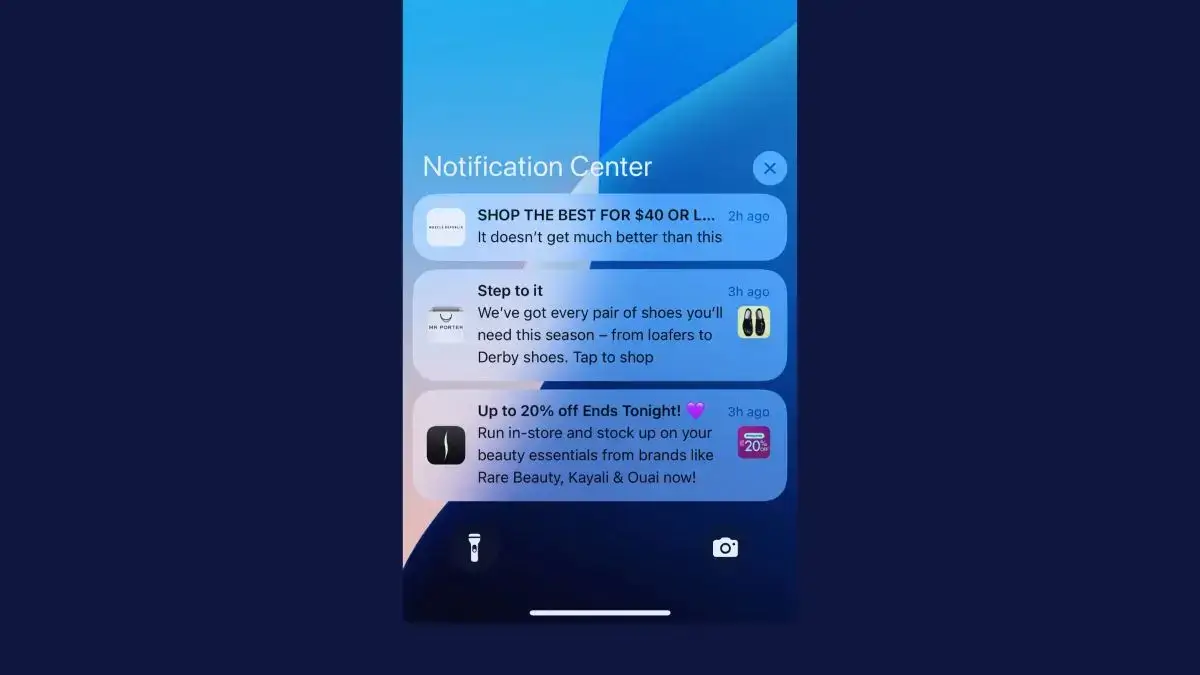
A brand app is best suited to the same job for your business. Your best customers keep your icon on their home screen, and push notifications reach them at no cost per message, with no marketplace in between.
Building Your Own Shopping App With MobiLoud
MobiLoud transforms your website into a custom native app, powered by the same underlying code as your website. We work with mid-market and enterprise online brands, and it’s a strong fit for brands whose stores already sell well and whose customers come back to buy again.
We build the app from your existing site, building a custom native experience around it for the phone. Your products, menus, search, loyalty program and subscriptions come with it, inside a fully custom native design, and we add push notifications, app-only pages and native features on top.
Because the app feeds from the same codebase as your website, it launches with everything you’ve already built and stays consistent with your site as it changes. Our team builds, launches and looks after your app, so there’s nothing for your team to maintain.
We’ve helped brands like John Varvatos, Jack & Jones and Tadashi Shoji launch their ecommerce apps this way, typically in 2 to 4 weeks.
Final Thoughts
Amazon’s growth hasn’t slowed with its size. It sold more in 2025 than any other company and now delivers more US parcels than the Postal Service. Its ad business alone earns more than ten times Walmart’s.
For shoppers, that scale means low prices and fast delivery. For brands, it means a channel that’s hard to ignore and impossible to own, because Amazon keeps the customer, the data and a share of every sale.
The brands that do best treat Amazon as a place to be found and their own store and app as the place customers come back to. Amazon built its lead on repeat customers: Prime gives them a reason to return, and the app keeps the store one tap away. That’s a playbook any brand can run on its own channels.