


In 2026, many brands benefit from having a mobile app as a channel to engage their most loyal repeat customers.
Tapcart is a widely recognized Shopify mobile app builder. For Shopify brands, it is often one of the first options considered when exploring mobile app solutions. It provides an alternative to custom native app development, which can be significantly more costly.
However, Tapcart is one of several options available, and some brands may find other solutions better suited to their specific needs.
Reasons to consider alternatives include encountering feature limitations, evaluating ongoing costs, seeking a different approach to app maintenance, or requiring compatibility with ecommerce platforms beyond Shopify. Additionally, some brands may prefer solutions that preserve their existing web experience rather than rebuilding within templates.
This guide presents seven Tapcart alternatives available in 2026. These options vary in pricing, flexibility, service levels, and platform compatibility.
You will find details on how each alternative works, pricing information, and scenarios where they may be appropriate replacements for Tapcart. For many brands, MobiLoud offers a comprehensive solution across these factors.
The Case For and Against Tapcart
Tapcart is a no-code app builder designed specifically for Shopify brands.
It provides marketers and ecommerce teams with a drag-and-drop interface to create branded iOS and Android apps without coding. Key features include real-time Shopify synchronization, push notifications, in-app analytics, and integrations with tools such as Klaviyo and Yotpo.
Tapcart enables a relatively fast path to launching a mobile app without developer involvement. However, certain factors may lead brands to explore other options.
Common considerations when evaluating alternatives include:
- Feature parity with your website. If your store uses custom functionality, third-party apps, or conversion rate optimization tools, integrating these into a Tapcart app may require additional work or may not be fully supported.
- Maintenance effort. Managing an app built separately from your website can require duplicating content updates and merchandising efforts to keep both platforms aligned.
- Platform compatibility. Tapcart is designed exclusively for Shopify. Brands using WooCommerce, BigCommerce, Magento, Salesforce Commerce Cloud, or headless architectures may need alternative solutions.
- Service model. Some brands prefer a partner to manage technical aspects, app store submissions, and ongoing optimization rather than using a self-service software platform.
- Cost considerations. Tapcart involves ongoing subscription fees that may be a factor for smaller brands or those seeking different pricing models.
The following section outlines seven Tapcart alternatives that address these considerations in various ways.
Whether you prioritize workflow simplicity, cost efficiency, cross-platform support, or managed services, this list includes options to consider.
The Top 7 Tapcart Alternatives in 2026
Whether you are launching an app for the first time or evaluating alternatives to Tapcart, this list provides an overview of notable options.
Here are seven Tapcart competitors to consider.
1. MobiLoud – Best All-Round Tapcart Alternative for High-End Ecommerce Brands
How it works
MobiLoud is a fully managed service that turns your existing website into native iOS and Android apps, regardless of the ecommerce platform you run on.
Where most Tapcart alternatives on this list are Shopify-only template builders aimed at smaller merchants, MobiLoud works with every modern web stack: Shopify and Shopify Plus, Hydrogen, BigCommerce, Salesforce Commerce Cloud, Adobe Commerce (Magento), VTEX, WooCommerce, headless setups, and custom builds on Next.js, Laravel, or proprietary stacks. The app is powered by your existing website, so every integration, custom feature, and CRO win on your site carries over to the app from day one.
The MobiLoud team handles native iOS and Android engineering, app design, push notification setup, GA4 and Firebase analytics, cross-device QA, and submission to the App Store and Google Play. Apps go live in 2 to 4 weeks, and your team doesn't need to staff or run the project.
After launch, MobiLoud stays with you, handling ongoing app maintenance and supporting you on push strategy, and growth. Their focus is on making your app a success, not just building it and handing it off.
Why MobiLoud makes sense vs Tapcart
Tapcart is built for one kind of brand: a Shopify store with a catalog and tooling that fits inside Tapcart's pre-built features. The further your brand sits from that profile (Shopify Plus with custom checkout extensions, multi-region setup, headless architecture, a non-Shopify backend, or a complex tech stack), the more Tapcart's model may not support what you want to do.
MobiLoud is built for the rest of the market. The 2,000+ apps shipped with MobiLoud include BESTSELLER's portfolio (ONLY, Jack & Jones, Vero Moda), John Varvatos, Tadashi Shoji, Junior Couture and more. These span enterprise commerce, fashion, B2B, multi-storefront, and non-ecommerce categories on every major platform.
It's a great alternative for Shopify Plus brands, as MobiLoud preserves checkout extensibility, multi-currency, B2B logic, and any third-party Shopify app you rely on. For brands on BigCommerce, Magento, Salesforce Commerce Cloud, or custom stacks, MobiLoud is one of the few options on this list that supports you at all.
The cost is higher than Tapcart's, but you get more for it: a dedicated mobile app partner, and an app that is flexible to fit whatever you do on the web.
- Pricing: Business plan is $1,499/month plus a one-time setup fee. Enterprise pricing is custom, scoped to fit brands on Shopify Plus, BigCommerce Enterprise, Salesforce Commerce Cloud, Adobe Commerce, headless or multi-storefront setups, or any brand with formal security and procurement requirements.
- Best for: Enterprise brands, Shopify Plus stores, brands on platforms other than Shopify, and any brand whose website uses custom code, complex integrations, or features that don't fit inside a template builder.
Want to see what’s possible? Get a free preview of your app now.
2. Appbrew – More Flexible, Higher Price Point
How it works
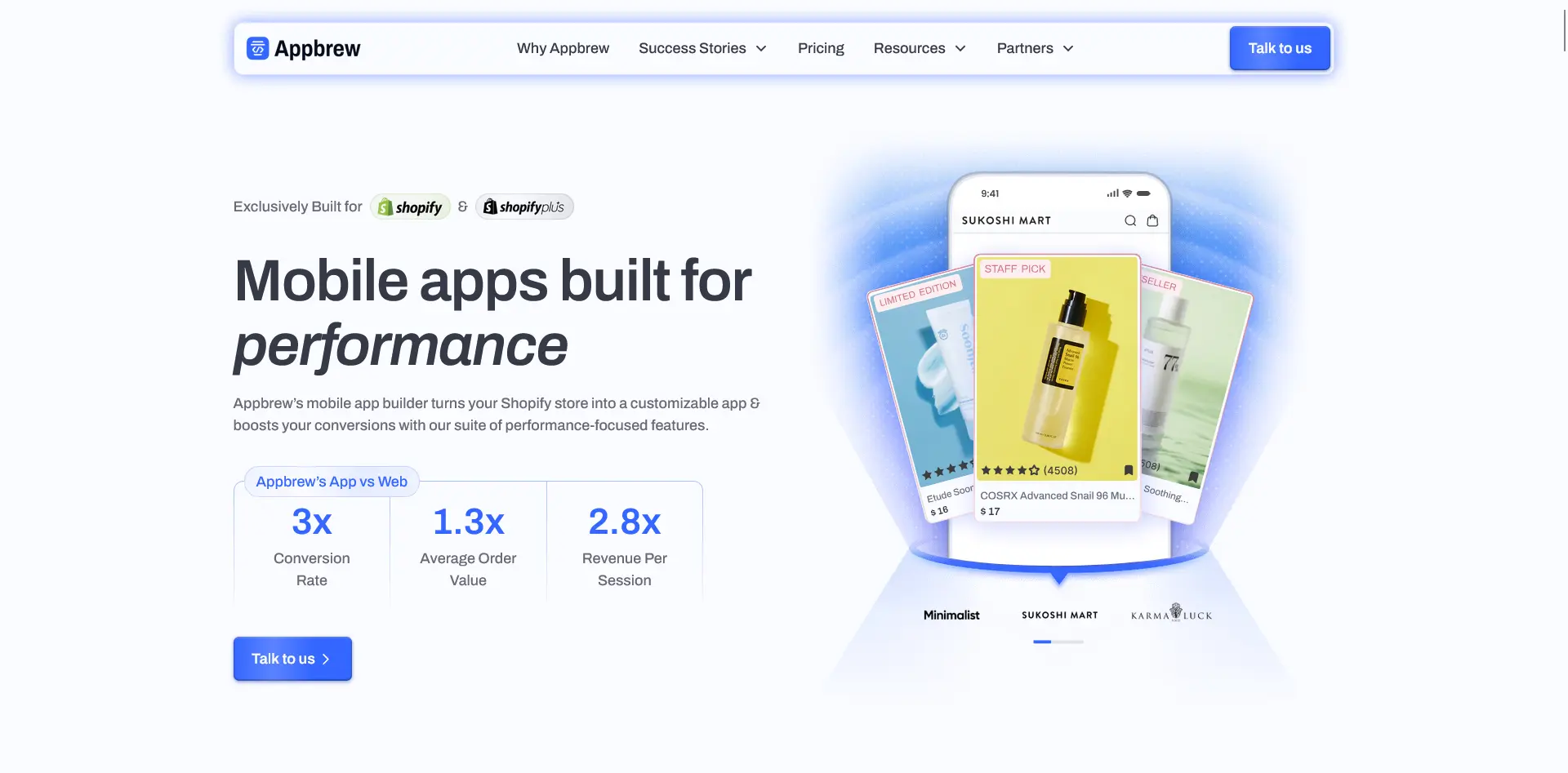
Appbrew is a Shopify-focused mobile app platform that combines a template-based builder with customizable modules.
It provides deep Shopify integration, custom content management system capabilities, and performance optimization features, with more options for layout and component customization compared to some other builders.
Why it makes sense vs Tapcart
Appbrew may be suitable for Shopify Plus brands seeking additional design flexibility and concierge onboarding support while maintaining some control over the build process.
As a DIY builder, it shares some characteristics with Tapcart but offers expanded customization and support options.
- Pricing: Public pricing starts at $999/month for the Pro plan; enterprise pricing is available on request.
- Best for: Established Shopify Plus stores with budgets for premium SaaS solutions and a preference for greater control over app design and features.
- Trade-offs: Pricing is higher than many builders; designed for Shopify only, so it may not suit multi-platform or headless setups.
3. MageNative – Budget Option
How it works
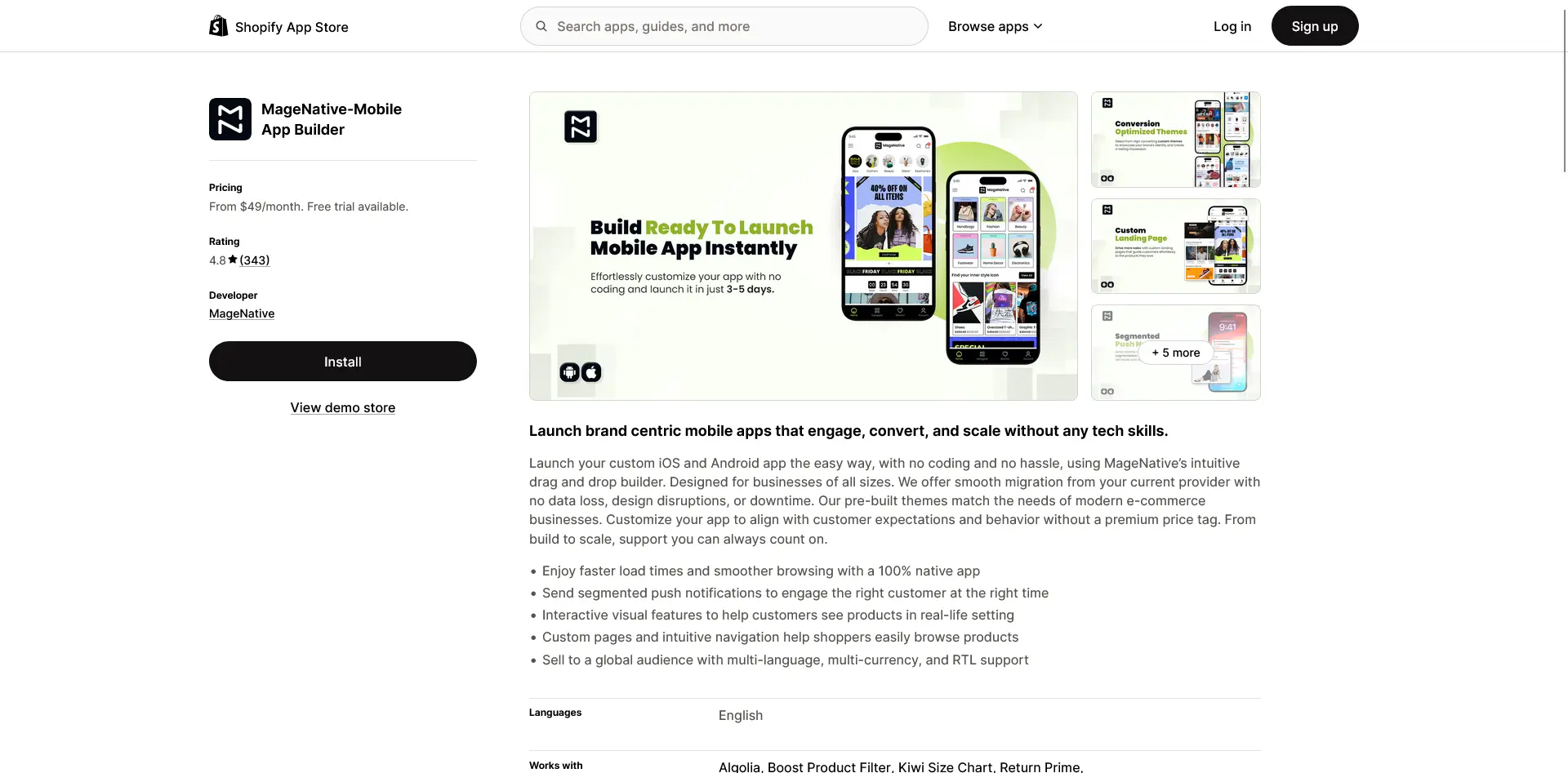
MageNative offers mobile apps for Shopify and other ecommerce platforms at a lower price point. It uses a template-based builder with native iOS and Android outputs, basic design customization, and push notifications.
Why it makes sense vs Tapcart
MageNative provides an entry-level option for brands aiming to launch a mobile app with a more limited initial investment.
It includes essential app features and can be a way to explore mobile commerce without a larger commitment.
- Pricing: Plans start at $49/month for basic features, with higher tiers offering additional customization and push notification capacity.
- Best for: Smaller merchants or early-stage brands validating the mobile app channel before investing in more comprehensive solutions.
- Trade-offs: Template-based design and support options may be more basic compared to Tapcart or managed services.
4. Vajro – Slightly More Affordable, Beginner-Friendly
How it works
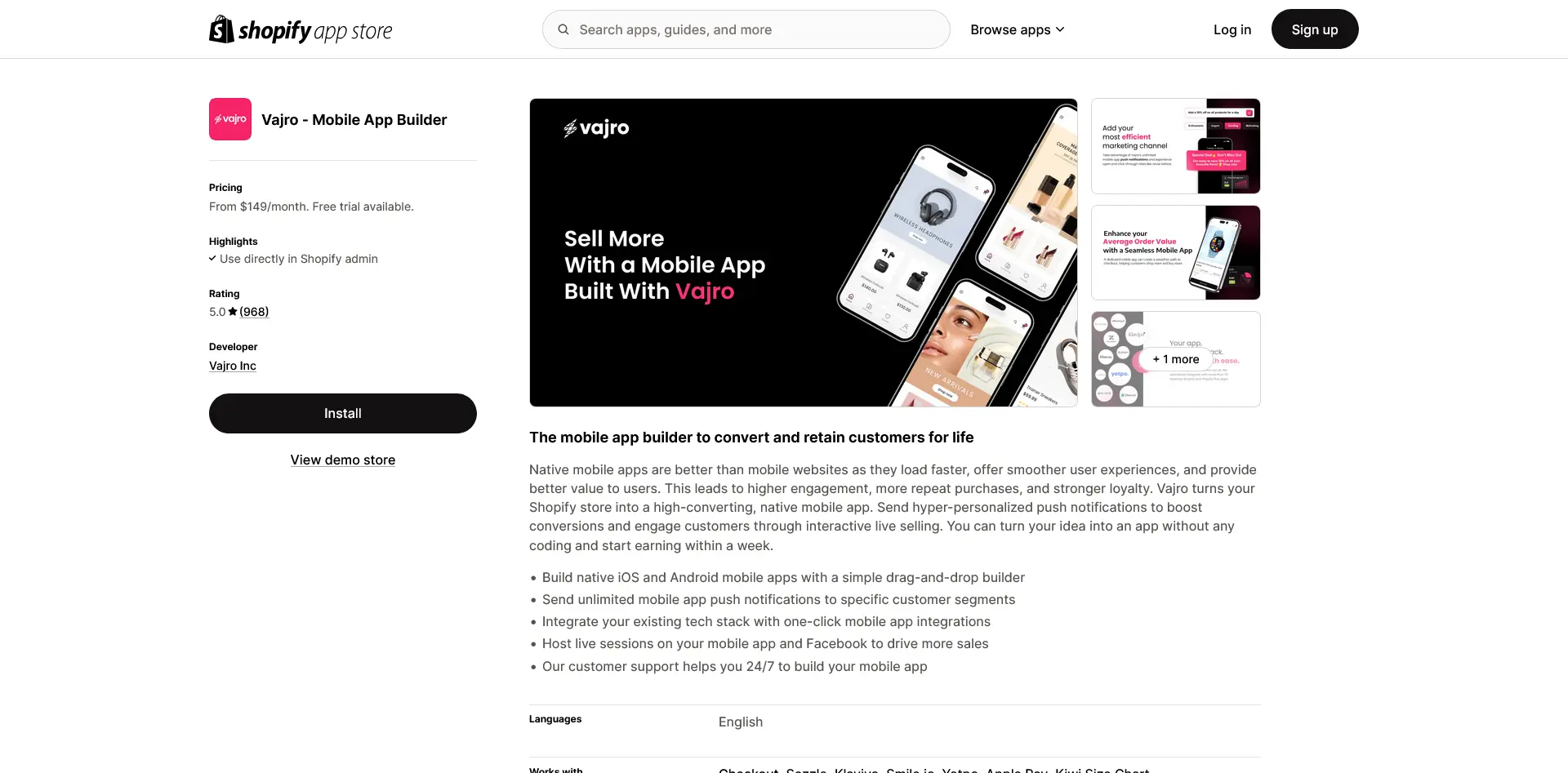
Vajro is a Shopify-specific app builder featuring a drag-and-drop editor, push notifications, analytics, live video selling tools, and integrations with common Shopify apps.
Why it makes sense vs Tapcart
Vajro offers additional features such as live selling and has entry-level pricing that may be more accessible for some brands. Its interface is designed to be user-friendly, which may reduce setup time.
- Pricing: Plans start at $149/month and scale up to $299, $599, and $999/month depending on features and usage limits.
- Best for: Shopify brands seeking a builder with merchandising features like live selling and a range of pricing options.
- Trade-offs: Apps are built using templates, and the platform is Shopify-exclusive.
5. Plobal Apps – Template-Based Builder
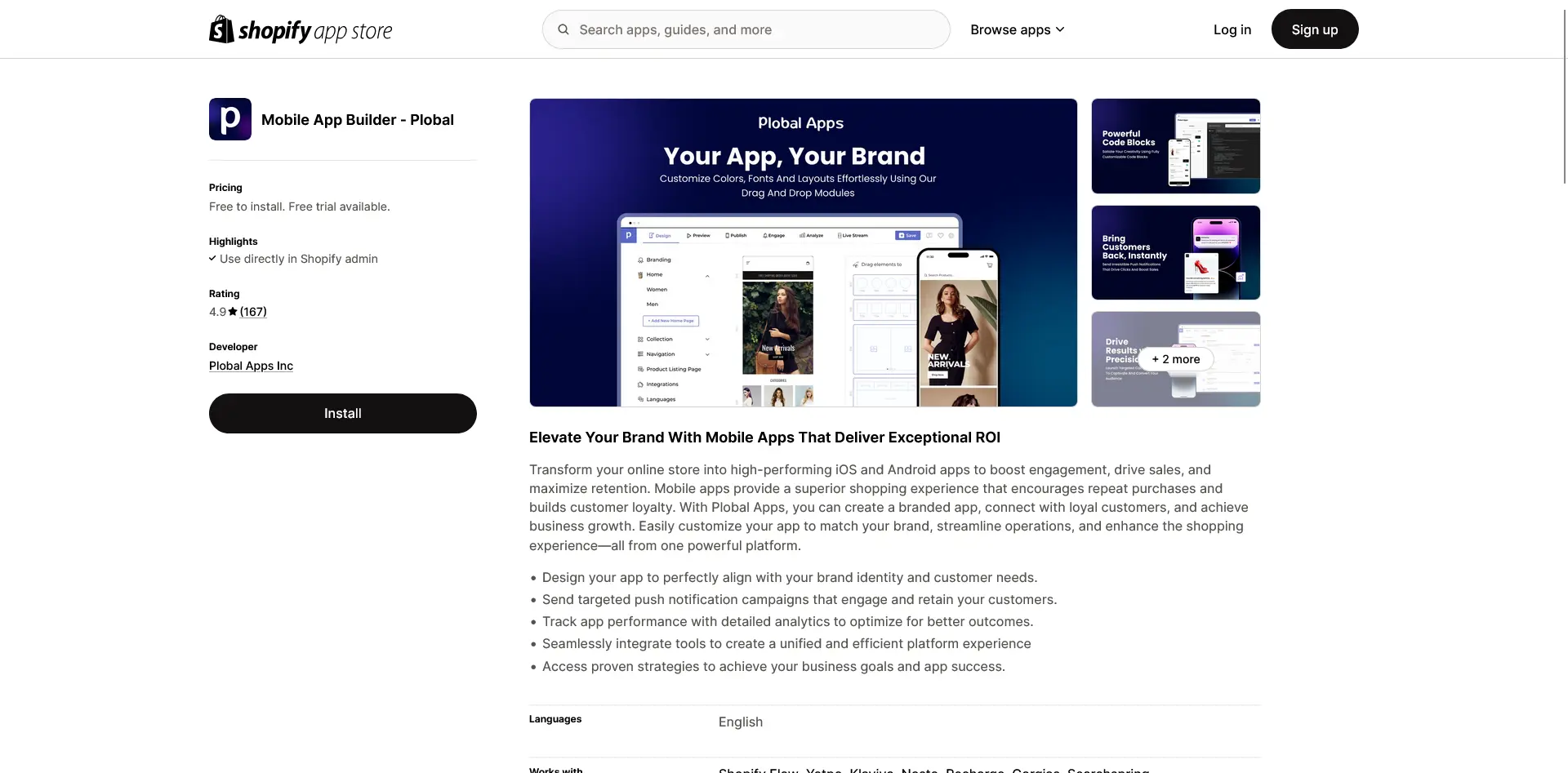
How it works: Plobal Apps is a Shopify app builder offering drag-and-drop customization, push notifications, analytics, and integrations with tools such as Klaviyo and Smile.io. Higher tiers include onboarding support and “success management.”
Why it makes sense vs Tapcart
Plobal Apps uses a builder model similar to Tapcart, with competitive mid-tier pricing and a focus on retention features.
- Pricing: $199, $499, and $1,199/month, with the enterprise tier including a 1% revenue share on in-app sales.
- Best for: Shopify brands comfortable with template-based apps and success-based pricing at higher tiers.
- Trade-offs: Shopify-only platform; apps require rebuilding and ongoing maintenance separate from the website.
6. JMango360 – Supports Multiple Platforms
How it works
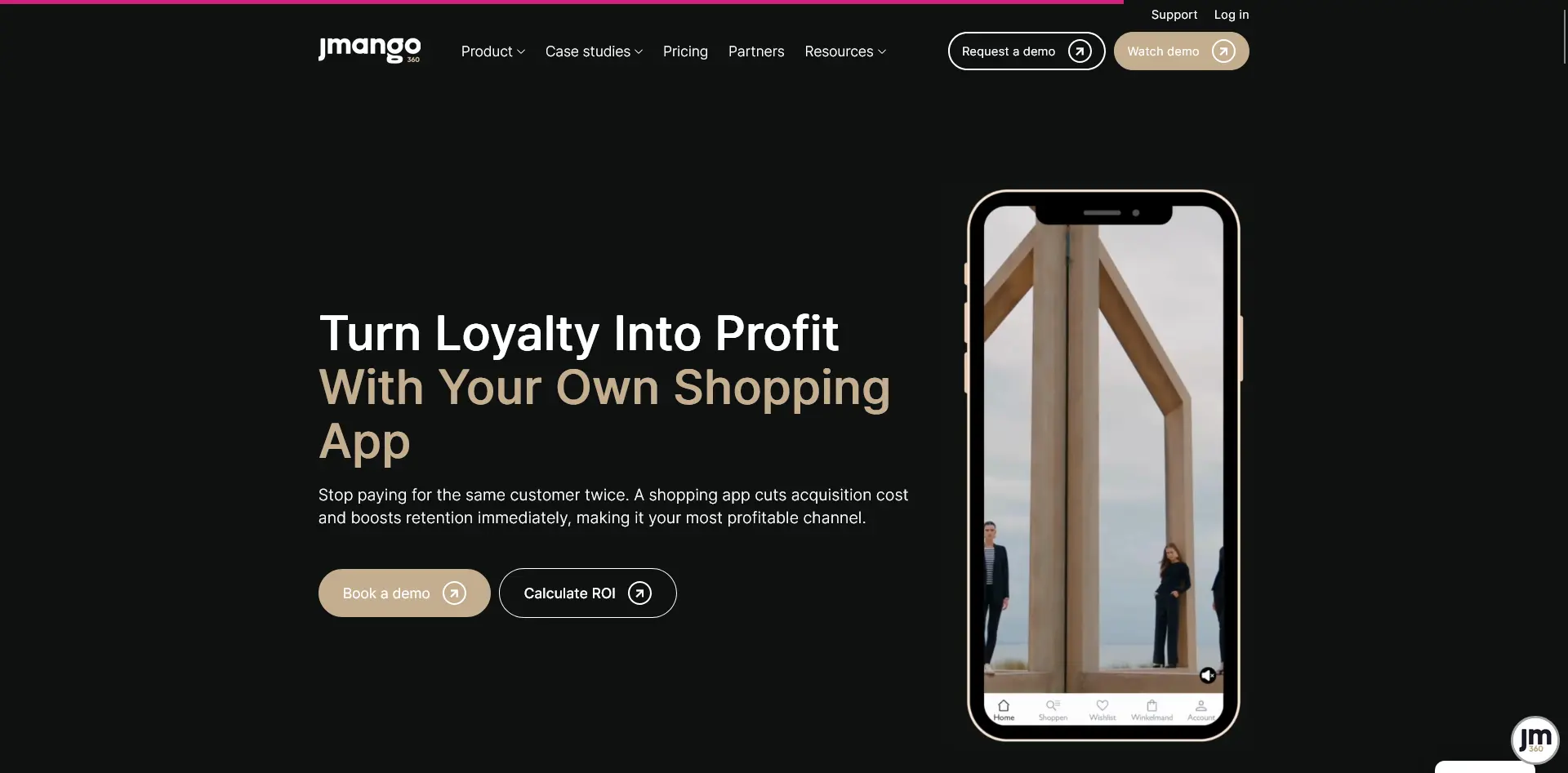
JMango360 is a hybrid app platform compatible with Magento, BigCommerce, Shopify, Salesforce Commerce Cloud, and other platforms. It integrates with ecommerce backends, offers push notifications, and supports both DIY builds and managed service packages.
Why it makes sense vs Tapcart
JMango360 is an option for brands using platforms other than Shopify or those considering future platform changes, providing multi-platform support.
- Pricing: Plans start at $299/month, with custom pricing for advanced projects; some brands report spending around $2,000 per month.
- Best for: Brands requiring a template-driven app builder compatible with multiple ecommerce platforms.
- Trade-offs: Maintaining the app separately from the website may involve additional ongoing effort compared to site-powered approaches.
7. AppMySite – Affordable WooCommerce Option
How it works
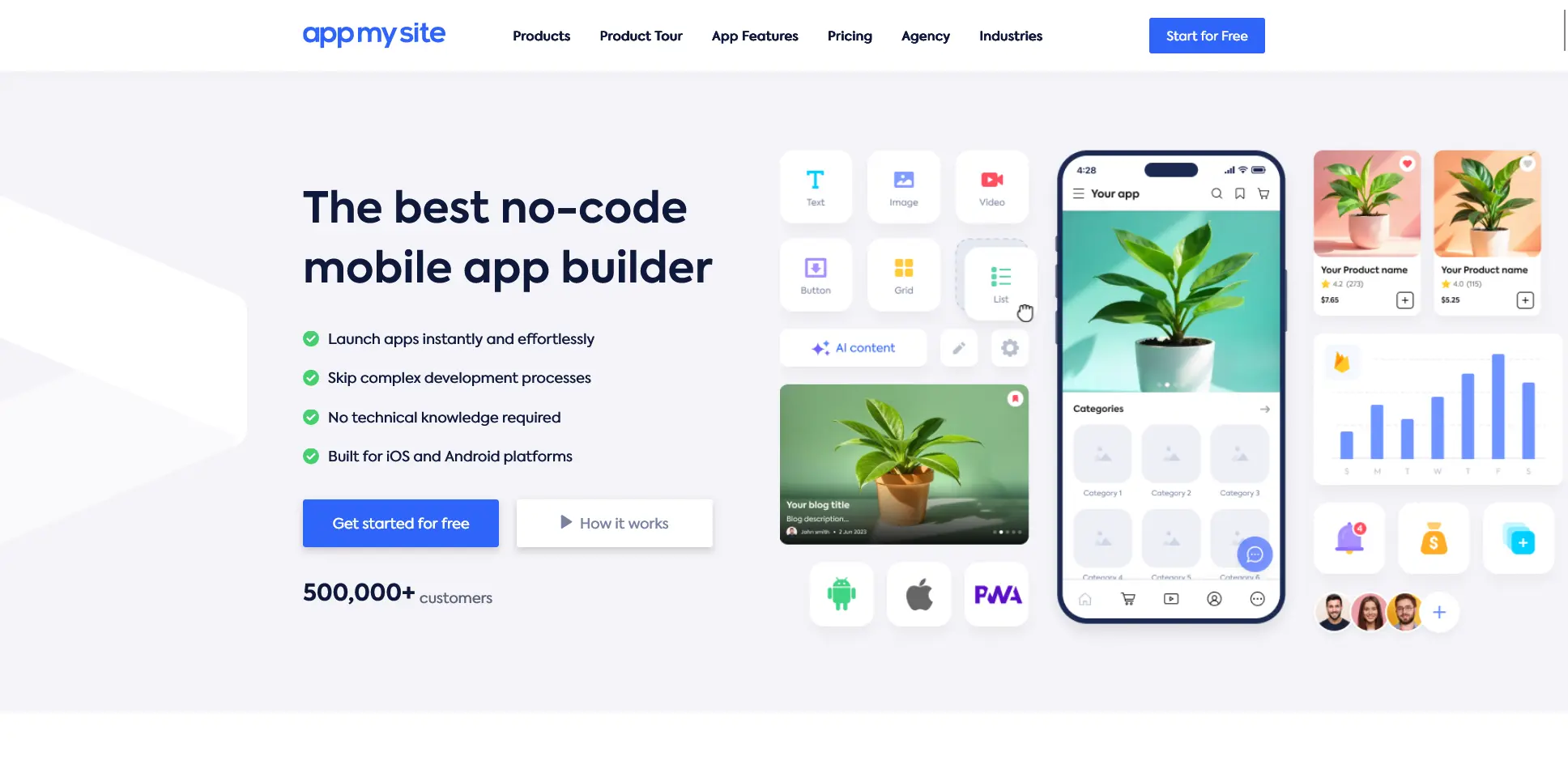
AppMySite is a low-cost, DIY app builder compatible with WooCommerce, Shopify (via web-to-app), and general websites. It offers native integrations for some platforms and webview apps for others.
Why it makes sense vs Tapcart
AppMySite provides an affordable option with a straightforward setup process. Its WordPress-first approach makes it a suitable choice for WooCommerce stores.
- Pricing: Plans start at $99/month for Android and iOS apps.
- Best for: Merchants with simple catalogs and minimal customization requirements who are price-sensitive.
- Trade-offs: DIY platform with limited native integration depth for non-WooCommerce sites and basic design customization.
Want to dive deeper? Check out Best Ecommerce Mobile App Builders available today
Choosing the Best Alternative to Tapcart
Selecting the right Tapcart alternative depends on your priorities.
Consider factors such as cost, platform compatibility, maintenance requirements, and desired service level. Important aspects to evaluate include:
- Platform and technology stack. Many builders are Shopify-exclusive, which may not suit brands using WooCommerce, BigCommerce, Magento, or headless setups. Cross-platform options like MobiLoud or JMango360 may be more appropriate in these cases.
- Total cost of ownership. Some builders offer low entry prices but include usage fees, feature unlocks, or revenue sharing at higher tiers. MobiLoud provides flat, transparent pricing without additional charges.
- Maintenance effort. Template-based builders require managing app content separately from the website, replicating changes and promotions. Site-powered apps like MobiLoud update automatically with website changes, reducing duplicate work.
- Feature parity. If your website uses custom code, conversion optimization tools, or advanced integrations, select a solution that supports these features in the app. MobiLoud preserves the full web experience.
- Service level. Decide whether you prefer to build and manage the app yourself or have a partner handle the process. MobiLoud offers a fully managed service from build through ongoing optimization.
For many brands, MobiLoud is a comprehensive Tapcart alternative.
It supports any ecommerce platform, requires no app rebuild, and delivers a polished, fully-featured app within weeks with minimal internal workload.
See Country Life Natural Foods, who spent approximately 10 hours launching their grocery app and have since seen increased revenue per user through the app.
Or XCVI, who transitioned from a DIY app builder to streamline workflows and reduce duplicated efforts.
Because MobiLoud apps are powered by your existing website, features and integrations remain consistent between the website and app.
With ongoing support from the MobiLoud team, brands have a foundation to launch and grow a mobile app channel effectively.
Ready to see what your app can look like with MobiLoud? Get a free preview now.
Migrating From Tapcart to an Alternative
If you are currently using Tapcart and considering a switch, it is helpful to understand the migration process.
With many DIY or template-based builders, migrating involves rebuilding product screens, homepage layouts, and features from scratch on the new platform.
This process requires time and effort and may involve app store submission considerations, including potential relaunches as separate listings.
MobiLoud offers a migration approach that leverages your existing website to power the app, eliminating the need to rebuild design, features, or integrations.
The MobiLoud team manages app store transitions, including updating screenshots, descriptions, and communication with Apple and Google reviewers.
From the user perspective, the app updates seamlessly without requiring action.
This approach can reduce downtime, maintain feature consistency, and lower internal workload during migration.
Next Steps
Choosing the right Tapcart alternative involves aligning your platform, budget, and maintenance preferences with a solution that meets your goals.
Review the options presented here based on your priorities.
If you seek a fully-featured app with no rebuild, reduced maintenance, and expert support, MobiLoud is a strong candidate.
Explore these case studies to learn how brands similar to yours have selected MobiLoud, including those transitioning from other app builders.
Ready to explore the best Tapcart alternative for your brand? Get a preview of your app now.