Most ecommerce brands know what it costs to win a customer, down to the cent. Ad spend, discounts and conversion rates get checked every day, because that’s where the money goes out.
But for a lot of brands, the first order barely covers what it took to get it. The profit arrives when that customer comes back and buys again, which makes repeat customer rate one of the most important numbers in an online store.
This guide covers what repeat customer rate is, how to calculate it, what a good rate looks like for your category, and why having a mobile app is one of the best ways to raise it.
What Is Repeat Customer Rate?
Repeat customer rate is the percentage of your customers who placed more than one order in a set period, usually the last 12 months. You’ll also see it called repeat purchase rate or repurchase rate.
It shows how much of your customer base has moved past a single purchase. A low rate means your revenue depends on a constant stream of new buyers. A high rate means the customers you paid to acquire keep buying after their first order.
How to Calculate Repeat Customer Rate
To calculate repeat customer rate, divide the number of customers who ordered at least twice by the total number of customers who ordered in the same period, then multiply by 100:
Repeat customer rate = (customers with 2+ orders ÷ total customers) × 100
Say your store had 2,000 customers over the last 12 months, and 500 of them placed two or more orders. Your repeat customer rate would be 500 ÷ 2,000 × 100 = 25%.
Here are a few details to be careful of when calculating your rate — as they change the result more than you’d expect:
- Count customers, not orders. Someone who ordered five times still counts as one repeat customer.
- Use one period for both numbers. The repeat customers and the total should come from the same date range.
- Expect a dip after a big acquisition push. New customers haven’t had time to come back yet, so a busy Black Friday can pull your rate down for a few months.
Why the Time Window Matters
The longer the window, the higher your rate, because customers get more time to come back. A 30-day rate and a 12-month rate for the same store can look like two different businesses.
In a February 2026 analysis by BS&Co, an email and SMS agency, about half of repeat buyers across the DTC brands it studied placed their second order within a month of the first. By three months it was 76%, and by six months 87%.
A 30-day window would only catch half of those customers. Twelve months suits most stores, and it’s the window Bluecore and BS&Co use in the benchmarks below. Whichever you pick, use the same one every time so the trend means something.
Your platform’s number may not match your own math, either. Shopify’s customer reports look at each customer’s whole order history, not just the dates you select, according to Shopify’s help center. A customer whose second order came after the period can still count as a repeat customer.
Repeat Customer Rate vs Other Retention Metrics
Repeat customer rate sits alongside a few other retention metrics, and their names overlap. Here’s how they differ:
| Metric | What it measures | How to calculate it |
|---|---|---|
| Repeat customer rate (or repeat purchase rate) | The share of customers who ordered more than once in a period | Customers with 2+ orders ÷ total customers × 100 |
| Returning customer rate (Shopify) | The share of a period's customers who count as returning, based on their whole order history | Returning customers ÷ total customers × 100 |
| Customer retention rate | The share of customers from the start of a period who are still customers at the end, leaving out new ones | (Customers at end − new customers) ÷ customers at start × 100 |
| Purchase frequency | How many orders the average customer places in a period | Total orders ÷ total customers |
Track repeat customer rate and purchase frequency together. One tells you how many customers come back, and the other tells you how often they do.
What Is a Good Repeat Customer Rate?
A good repeat customer rate for most online stores is around 20% to 30% over a year, the range Klaviyo’s guidance calls good. Studies of real store data have found averages a little below that:
- Bluecore’s benchmarks of more than 100 retailers put the average repeat purchase rate at 16.5% in 2023.
- BS&Co’s 2026 analysis of 156,110 customers of DTC brands found that 18.8% placed a second order within 365 days.
As a rough guide over 12 months:
- Under 15%: You’re below the averages above, unless you sell durable or high-ticket products.
- 15% to 20%: You’re around the average across categories.
- 20% to 30%: You’re doing well for most categories.
- Over 30%: That’s typical for consumables like supplements and food, and strong for anything else.
The overall average only tells you so much, though. A 20% rate could be strong for a furniture brand. For a supplements brand whose customers run out every month, the same rate would point to a real retention problem.
The most useful comparison is with brands that sell similar products, at similar prices, on a similar buying cycle.
Repeat Customer Rate Benchmarks by Industry
What you sell makes the biggest difference to your repeat customer rate. A furniture store, for example, is much less likely to have regular repeat customers than a grocery brand.
Three recent studies break down repeat purchase rate by category. They measured different brands over different windows, so the same category can land several points apart:
| Category | Decile (6 months, 2026) | Bluecore (12 months, 2023) | BS&Co (365 days, 2026) |
|---|---|---|---|
| Supplements | 45% | Not reported | 30–40% (all consumables) |
| Food and beverage | 34% | Not reported | 30–40% (all consumables) |
| Fashion and apparel | 25% | 20.2% | 12–17% (fashion, beauty and jewelry) |
| Health and beauty | 20% | 21.5% | 12–17% (fashion, beauty and jewelry) |
| Home goods | 21% | Not reported | 10–15% (all durables) |
| Sporting goods and outdoor | Not reported | 21.2% | Not reported |
| All categories | Not reported | 16.5% | 18.8% |
Decile, a customer analytics company, measured its ecommerce clients over the first half of 2026. Bluecore measured more than 100 leading retailers over all of 2023, and BS&Co grouped the brands it studied into three broad types.
The pattern is clearest in Decile’s and BS&Co’s numbers. Brands selling things people use up and reorder, like supplements, food and drink, repeat far more than brands selling things people keep.
Customers need more groceries, vitamins and coffee whether or not a brand runs a clever retention strategy. Nobody buys a new sofa or laptop on that schedule.
Purchase frequency follows the same split. In Decile’s data, supplements customers averaged 2.09 orders in the first half of 2026 and food and beverage customers 2.0, against 1.27 to 1.43 for fashion, beauty and home goods.
Why Repeat Customers Matter So Much
Repeat customers change the economics of an online store. They order more, they spend more, and you don’t have to pay to find them twice.
Across Bluecore’s retailers, active buyers placed 57.6% more orders and spent 69.2% more than new buyers in 2023.
Their share of revenue grows with your repeat rate. In BS&Co’s data, the consumables brand with the highest repeat rate (44%) earned 66.5% of its revenue from repeat customers, while fashion and durables brands earned 12% to 19%.
Decile’s 2026 benchmarks tell a similar story. Returning customers brought in 55% of revenue for food and beverage brands in the first half of the year, and 39% to 46% in the other four categories.
Repeat customers are also cheaper to reach. Instead of paying Meta or Google to put your brand back in front of someone who already bought from you, you can reach them through channels you own.
The second order matters most. It shows the first wasn’t a one-off, and it’s where a buying habit starts, so anything that makes that second purchase easier pays off over the customer’s whole lifetime.
How Mobile Apps Increase Repeat Customer Rate
A mobile app is one of the most effective ways to raise repeat customer rate, because it’s built for the customers who already know you.
The goal isn’t to get first-time visitors to download it. It’s to give your most engaged customers a better way to shop, and a direct line to bring them back.
In our 2025 ecommerce benchmark report, 60% of first-time app buyers went on to buy again. App users’ lifetime value was 2.8 to 5 times that of web-only shoppers, and they brought in 3.5 to 7 times more revenue per user than mobile web visitors.
Here’s what makes the difference.
Push Notifications Bring Customers Back at the Right Moment
Push notifications are the biggest retention advantage an app gives you.
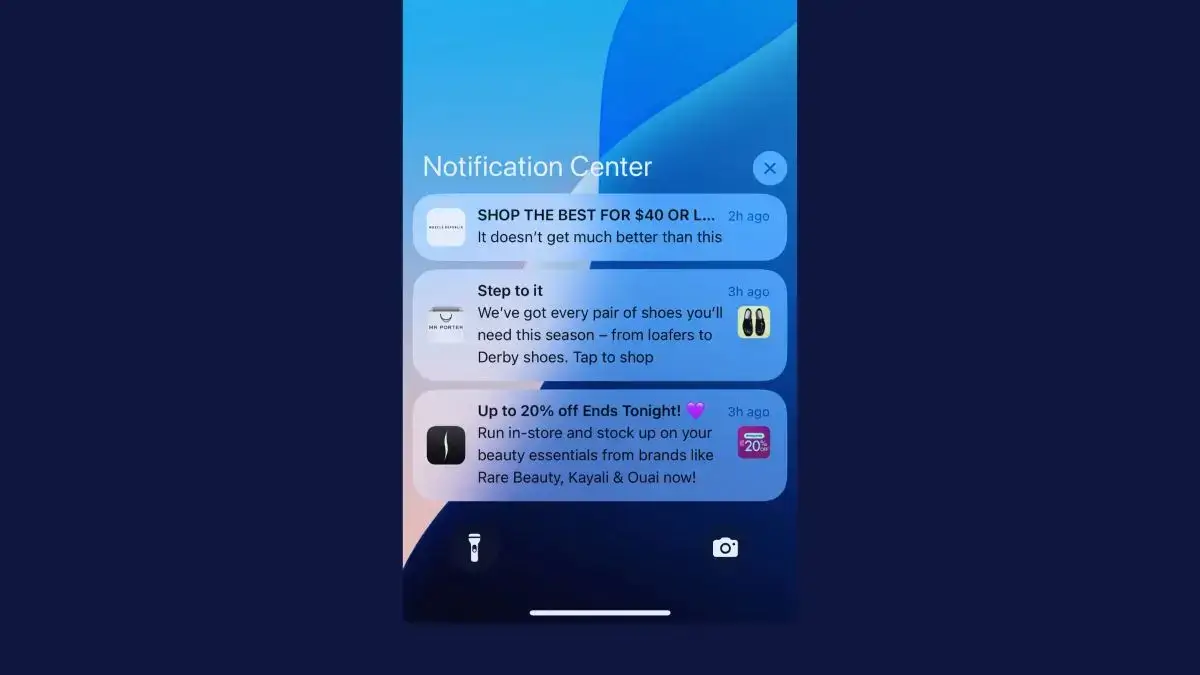
Email still works, but inboxes are crowded. SMS gets attention, but every message costs money and promotional texts wear thin fast. Push lands on the lock screen and costs nothing per message, so you can reach customers whenever there’s a reason to.
For a repeat-purchase brand, those reasons come up all the time:
- Replenishment reminders
- New launches and drops
- Back-in-stock and price drop alerts
- Loyalty points and rewards
- Abandoned carts
- Win-back offers for lapsed customers
A supplements brand can send a reminder around the time a customer is likely to run out. A beauty brand can promote a new product that fits what someone bought before. A fashion brand can tell its best customers about a new collection before it goes live.
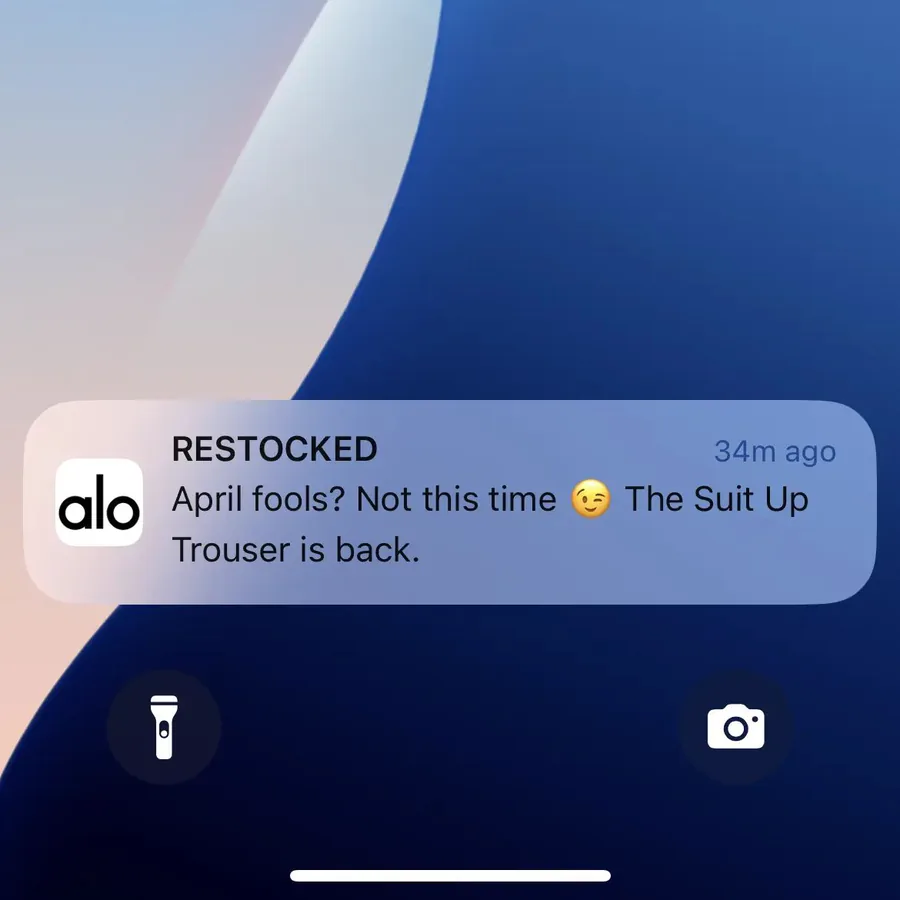
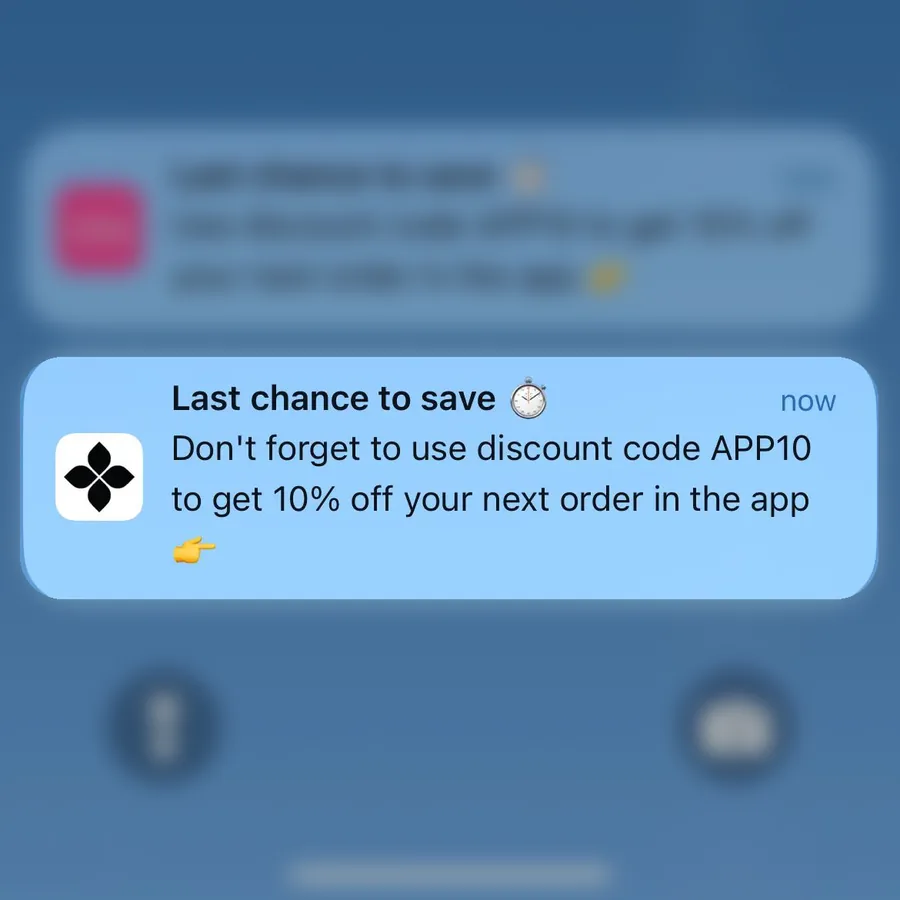
Each notification opens straight to the right page in the app, with no ad platform controlling your reach or taking a cut of the click.
"Push notifications are the cheapest and most powerful communication channel we have. We find that users who prefer to interact via an app are more loyal, buy from us more often and spend more time with our content."
Your Store Lives on the Home Screen
A website disappears when the browser tab closes. An app stays on the customer’s phone, and your icon is there every time they unlock it.
Customers don’t have to search for your brand, remember your web address, dig out an old email or wait for a retargeting ad to find their way back. They tap the icon and they’re in your store.
That sounds like a small thing, but repeat buying is mostly about removing small bits of friction. The easier it is to come back, the more often customers do.
In our benchmark report, a wellness brand’s app users averaged 4.7 engaged sessions each in the first quarter of 2025, against 1.1 for its mobile web visitors. That’s not a small lift at all.
"Having our brand icon on customers' phones is a game-changer for retention."
Reordering Takes a Few Taps
Returning customers don’t need persuading the way first-time visitors do. They already know what they want, and in BS&Co’s data, 77% of second purchases were a reorder of the same product.
An app keeps customers signed in, with their account, saved addresses and past orders a tap away. You can also design it for people who are already sold, instead of for first-time visitors.
Streetwear brand Cold Culture did exactly that. Its app opens on New Arrivals instead of the usual banners and category menus, and its product pages drop the carousels and cross-sells to give regulars the shortest path to checkout.
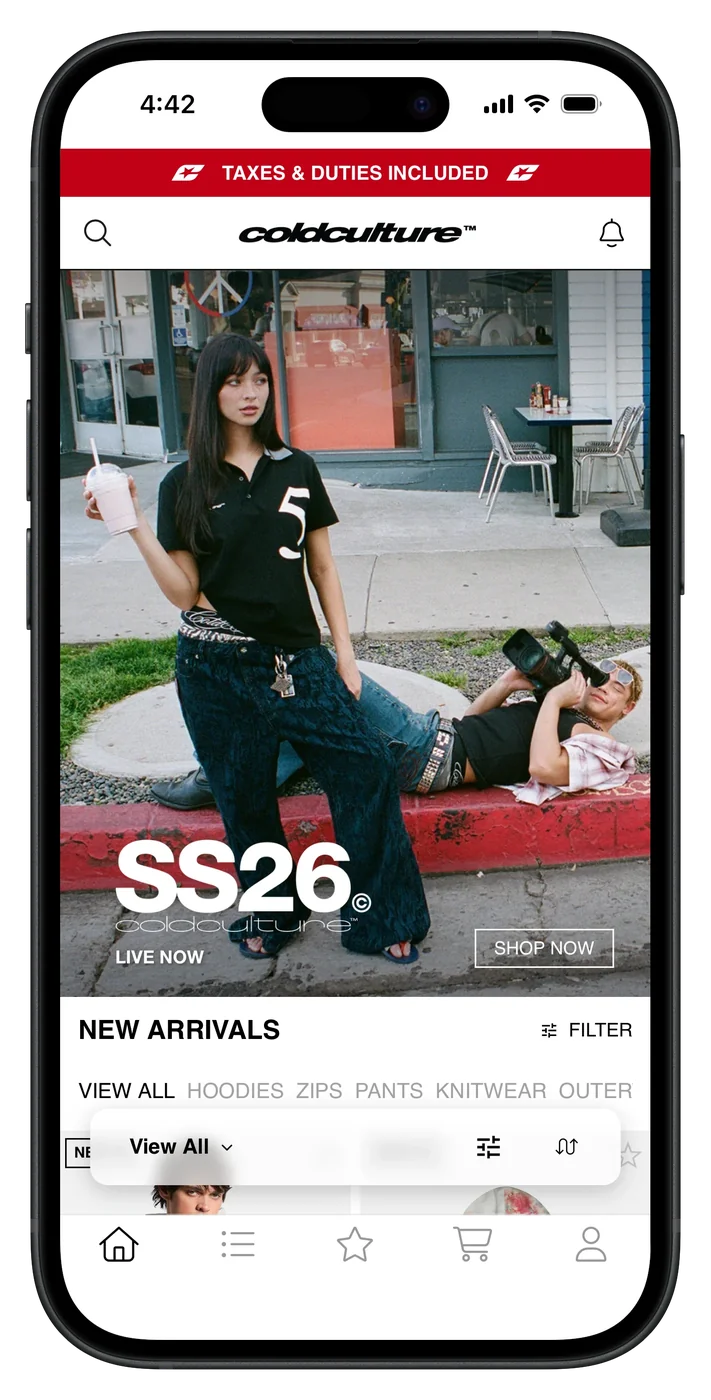
"In two clicks you have the purchase done. The worst case there will be three clicks: enter the product, add to cart, and finish the purchase."
Your Loyalty Program Gets a Home
Most loyalty programs are hard to find. They sit in a footer link or an account page, because the website’s main job is converting new customers, and a first-time buyer doesn’t care about points.
Even members forget how many points they have, what rewards they can claim or how close they are to the next tier.
An app gives your loyalty program a permanent home, where customers can check their points, redeem rewards and track their tier. Push notifications remind them when there’s something to claim.
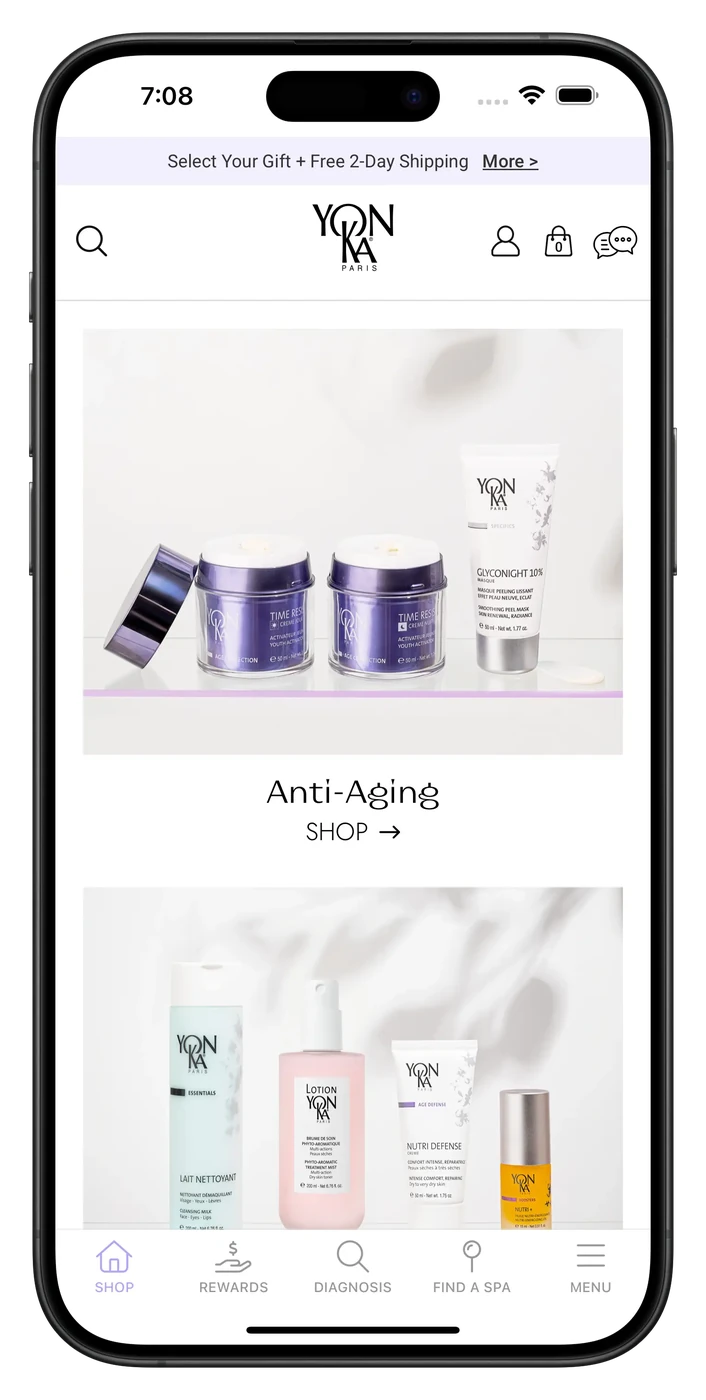
Skincare brand Yon-Ka Paris went a step further, giving customers extra loyalty points for orders placed in its app. That’s been a major driver of engagement with the app, according to its case study.
Subscriptions Are Easier to Keep
Subscriptions are one of the most direct ways to lift repeat purchases, because they turn the next order into a default instead of a fresh decision.
In pet supplies, Chewy made 83.3% of its net sales in fiscal 2025 from customers enrolled in Autoship, its repeat delivery program, according to its annual report.
But plenty of brands have switched on subscriptions expecting a shortcut to retention, then watched subscribers cancel. Keeping them depends on how easy the subscription is to live with.
An app gives subscribers a convenient place to manage their subscriptions, skipping or swapping an order instead of cancelling. It also gives you a reliable way to tell them about upcoming deliveries and add-ons.
Personal Offers Give Customers Reasons to Come Back
App users are signed in, with a purchase and browsing history behind them. That gives you what you need for personalized push notifications, recommendations that fit and offers that feel relevant.
Not every visit needs to end in a sale, which matters most for brands with longer buying cycles. Early access to launches, app-exclusive drops, member pricing and product guides all give customers a reason to open your app between orders.
The more often customers open your app, the more chances you have to land the next order when the timing is right.
Apps Work Best Where Customers Already Buy Again
An app is a powerful tool for repeat purchases, but it amplifies a reason to come back. It doesn’t create one.
It won’t convince anyone to buy a new mattress every month. If your repeat rate is low because customers have little reason to buy again, an app isn’t the fix.
Apps suit brands where repeat buying already makes sense. That means categories where products run out and need replacing, like grocery, food and drink, supplements, beauty and pet supplies.
Fashion is a strong fit too. Clothes don’t run out, but people buy more than one, and there’s always another shirt or dress to sell to someone who loved the last one.
The better your repeat customer rate already is, the more an app is worth to you. More regular customers means more people using your app, and more revenue it can bring back.
Can Apps Work for Lower-Frequency Categories?
Apps can work for lower-frequency categories like furniture, electronics and jewelry, but they need a clear reason to be on the customer’s phone.
That could be accessories and add-ons that customers buy between big purchases. It could be content and early access that keep your brand in mind, with the understanding that not every session needs to end in a sale.
Luxury menswear brand John Varvatos is a good example. Its customers buy high-ticket pieces, yet its app users visit 12 times more often, stay 3.6 times longer per session and bring in 10 times more revenue per user than mobile web shoppers, according to its case study.
"In high priced fashion, people want that VIP treatment. If you go to a John Varvatos location today, we'll take care of you. It's one-on-one. We'll work with you, hand you a drink when you walk in, you sit down in the nice little lounge area. We'll bring clothes to you to try on. It's a VIP customer experience that we're providing. We also want to do that via our app."
A luxury customer may buy less often, but each customer is worth enough to justify an app built around them.
Launching an App for Your Repeat Customers
If your customers buy from you again and again, a native app is the channel that keeps you on their home screen between orders. Push notifications are how you bring them back at the right moment.
The obstacle has always been building and running a second product, with its own code, its own team and its own release schedule.
MobiLoud transforms your website into a custom native app, powered by the same underlying code as your website. We build the app from your site’s code, so your products, accounts, loyalty program and subscriptions are there from day one.
Then we design a fully custom, native interface for the app, and add what only an app can do:
- Push notifications that reach your customers on iPhone and Android
- A listing in the App Store and Google Play
- App-only pages your team builds in your own platform
- Native features, SDKs and device integrations where you need them
Your best customers get a flagship app on their home screen, and you get a direct channel to them that doesn’t cost you every time you use it.
Because your app feeds from the same codebase, it always stays consistent with your site. Our team builds, launches and looks after it, and helps your app grow and drive revenue, without giving you another storefront to worry about.
Final Thoughts
Repeat customer rate shows whether your acquisition spend is building a customer base or renting one. Know your number, compare it with brands that sell what you sell, and measure it over the same window every time.
The most reliable way to raise it is to make coming back easy. That’s why apps work so well for brands with regular customers: a permanent place on the home screen, faster reorders, a home for loyalty and subscriptions, and push notifications that bring customers back at the right moment.
If your customers already have a reason to buy from you again, an app makes that next order much more likely.